
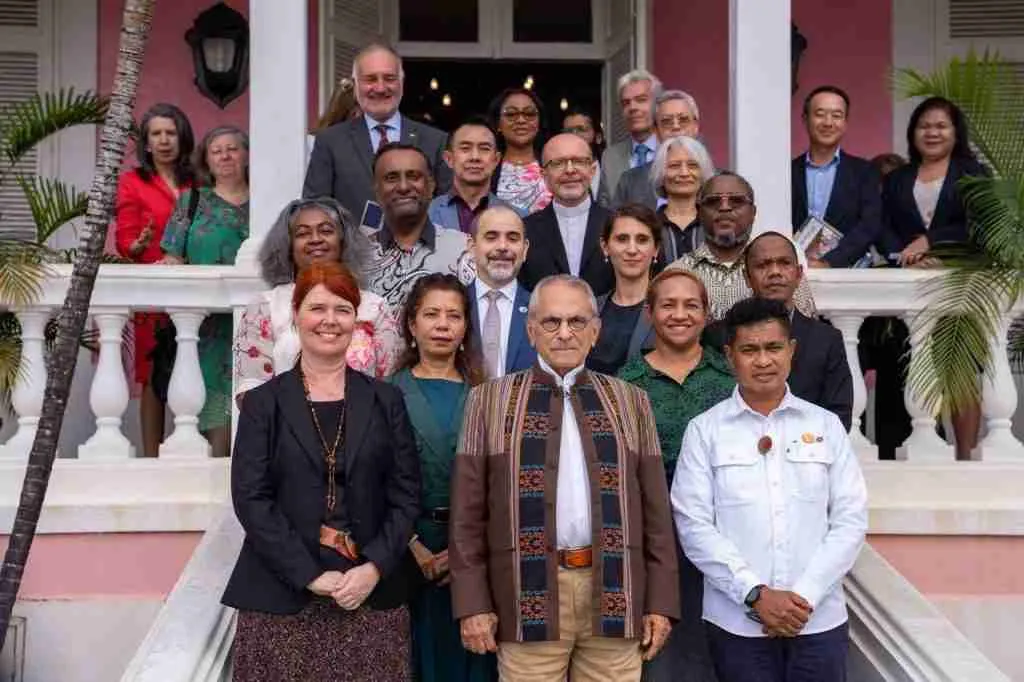
The Institute for Applied Economic Research (Ipea) participated in the launch of the first edition of the new Policy in Focus (PiF) in Timor-Leste. Representing Ipea at the event was Fábio Veras Soares, a researcher from the Department of International Studies and co-editor of this issue. The launch took place on February 18 and marked a collaboration between Ipea’s International Policy Centre for Inclusive Development (IPCid), the World Food Programme (WFP), and the socialprotection.org platform.
A Global Effort to Strengthen Food Security and Nutrition
Titled Overcoming Barriers to Food Security and Nutrition in Social Protection, this edition is a key achievement of the Global Task Force on Social Protection for Nutrition (GTF), co-chaired by the governments of Timor-Leste and Chile. The publication focuses on addressing challenges that limit the effectiveness of social protection systems in improving food and nutritional security. Strengthening these systems is crucial not only for human capital development but also for fostering local economic growth and advancing multiple Sustainable Development Goals (SDGs).
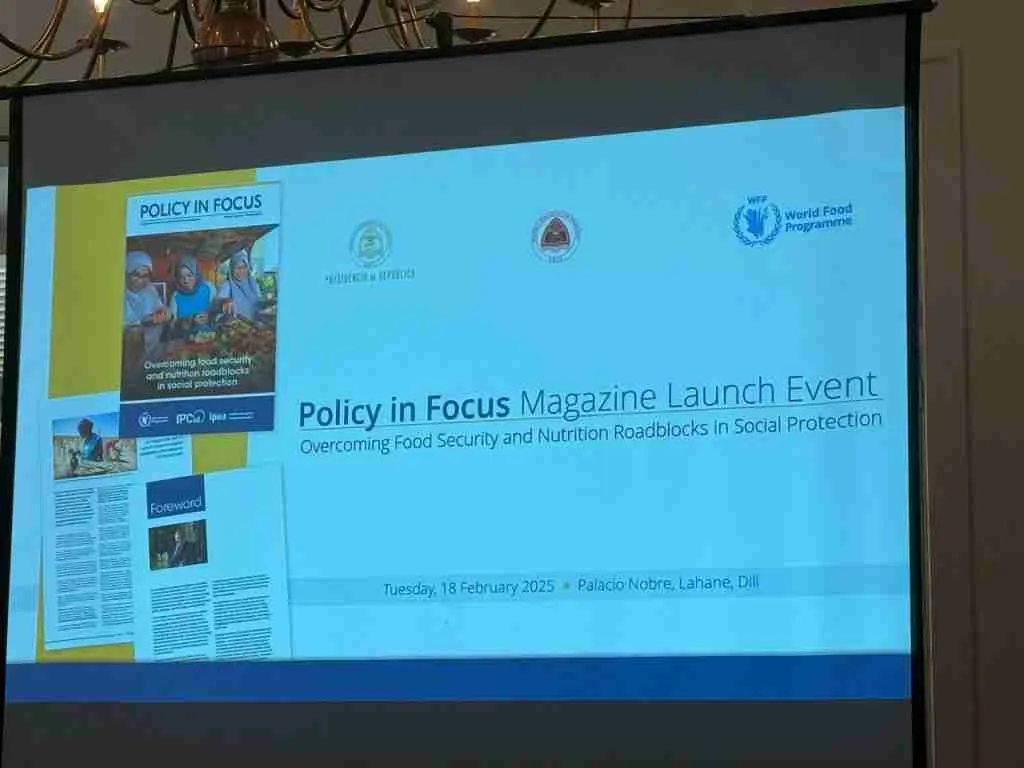
Featuring contributions from over 60 experts and practitioners, the issue presents 22 original articles offering evidence-based insights on integrating complementary measures into social protection systems to achieve SDG 2 (Zero Hunger). These policies aim to tackle food insecurity and malnutrition holistically, inspiring tangible solutions to eradicate hunger and malnutrition.
Bridging the Gap Between Social Protection and Nutrition
The publication underscores the critical role of nutrition and food security in designing robust social protection systems that break cycles of poverty, vulnerability, and inequality. Despite the growing global demand for social protection programs, a paradox remains: while cash and food assistance programs often increase food consumption, they do not always translate into improved nutritional security.
This gap between income security and nutritional well-being highlights the need for social protection systems that go beyond financial support. True success lies in ensuring not only economic stability but also access to diverse, nutritious diets that enhance health, resilience, and long-term development.
High-Level Endorsement and Global Commitments
The issue includes a foreword by President of Timor-Leste and Nobel Peace Laureate, J. Ramos-Horta, who also spoke at the event.
During his address, Fábio Veras Soares recalled that the first launch of this edition took place in Rio de Janeiro, Brazil, during the G20 Social, as part of the Sprints 2030 of the Global Alliance against Hunger and Poverty. During the Sprints 2030 countries and international organizations to announce early commitments under the Global Alliance. The dual launch in Brazil and Timor-Leste reflects the strong commitment of both nations to mobilizing financial resources and technical capacity for eradicating poverty, hunger, and malnutrition worldwide.
The Role of IPCid in Global Policy Collaboration
Established by Ipea in December 2022 within the Department of International Studies (Dinte), IPCid fosters knowledge-sharing on public policies between Brazil and its global partners. It also strengthens South-South learning, emphasizing inclusive and sustainable development in the Global South.
IPCid’s activities include research, capacity building, and advisory services, drawing on Ipea’s expertise and international partnerships. Key focus areas include social protection, hunger and poverty eradication, poverty measurement, policy formulation, and international cooperation.
Access the Publication
Click [aqui] to access Policy in Focus.
For more information on the event, click [aqui] to read the press release from the Presidency of Timor-Leste
2025-02-27 04:26 by IPC-ID