
From water access to climate resilience: The Cisternas Programme as a climate adaptation strategy
Autor: Marcelo Silva Oliveira Gonçalves, Duke University
Áreas Temáticas Sustainable Development
Compartilhe este conteúdo em suas redes
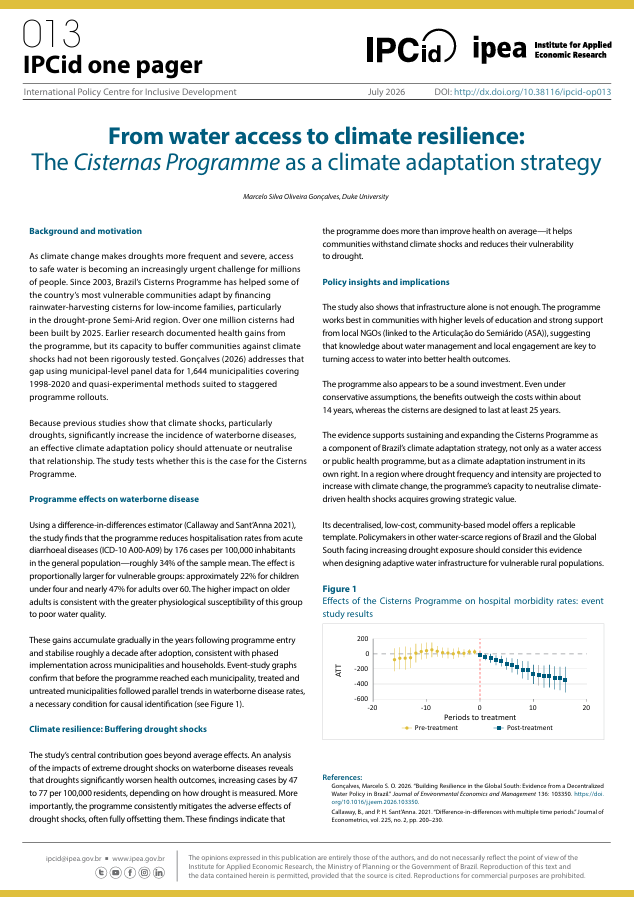
Resumo: As climate change increases the frequency and severity of droughts, access to safe water is becoming more urgent. Since 2003, Brazil’s Cisterns Programme has supported vulnerable communities, especially in the Semi-Arid region, by financing rainwater-harvesting cisterns for low-income families. Earlier studies identified health benefits, but its role in buffering climate shocks was not rigorously assessed. This study uses municipal panel data (1998–2020) and quasi-experimental methods to evaluate whether the programme reduces the impact of droughts on waterborne diseases.